

The Arabic Quilt by Aya Khalil
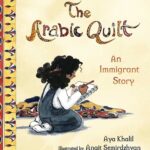
Published by Tilbury House Publishers on February 18, 2020
Key Words: Hardship, Bullying, Family, Resilience, Community, Migration.
Summary: Knazi is a young girl whose family recently moved from Egypt to America and is attending school. However, Knazi experiences many difficult situations, such as feeling different from the other kids and being bullied. Through these problems, Knazi remains true to herself and relies on a quilt made by her grandmother in Egypt, for strength. In the end, Knazi’s class joined to create a similar quilt, with all her classmates’ names written in Arabic, thereby becoming a story of overcoming hardships and success.
Book lesson: The lesson is not to be ashamed of being bilingual or different from other kids, and it shows the power of diversity by celebrating it.
Censorship: The Arabic Quilt is banned in some states. For example, Pennsylvania’s Central York School District banned it in September 2021 (Harvard,1)
Highlights: The highlights are the amusing circumstances shown throughout the book, such as Knazi wanting a peanut butter and jelly sandwich for lunch instead of a Kofta sandwich, something relatable for many children. I also like the way Knazi handled the situations she was in, such as a time when a little girl was being mean to her, yet she told an adult and was able to stand up for herself.
Children’s identity: A child reading this will develop their identity, as it showcases a different culture to them, or if they are Arab-American, validate their feelings, and encourage them to be themselves. It also hints that one of the children’smothers is intolerant of others, by her statements that because “they are American, they should speak English”. In the end, her daughter gives her mother her name in Arabic, helping her grow and evolve. This situation would help teach awareness, growth, and tolerance of others.
Sense of how others perceive us: Knazi is scared of how others perceive her, as she tries to change herself to fit in with her new school; however, towards the end, she becomes appreciative of the beauty of being different, specifically being bilingual.
Sense of Culture: Egyptian Culture is depicted multiple times throughout the story in different ways, such as food, traditions, and even family connections, as with her Teta in Egypt.
Sense of Belonging/Community: Knezi struggles as she feels like she does not belong in her community, finding it difficult to get to know the kids around her. This internal struggle causes her to not be confident and to do whatever she can to fit in with the crowd. There is a transformational moment in the story, when her mother comes in and helps the class make a quilt, showcasing the beauty of being proud of your identity and sharing that with others.