

2026 Big East Undergraduate Research Symposium
Providence College is proud to be participating in the Fifth Annual Big East Undergraduate Research Symposium on Saturday, March 14 at Madison Square Garden in New York City.
Each Big East school was invited to send five research projects. Congratulations to these Providence College students representing PC!
Hunger-sensing hypothalamic neurons drive food consumption despite environmental threat


Alonie Ashley ’28, Neuroscience
Madison Rohr ’27, Neuroscience and Health Policy & Management
Faculty mentor: Dr. Ryan Post, Psychology/Neuroscience
To survive in a dynamic environment, organisms must integrate information about their external and internal needs to optimally direct behavior. Our project simulates scenarios in which two survival needs–hunger and self-preservation in response to environmental threat– conflict to explore the neural circuits influencing motivated behaviors. To do this, we use mice models to manipulate the stimulation frequencies of Agouti-related peptide (AgRP) neurons, a population of neurons in the arcuate nucleus of the hypothalamus that drive food-seeking, when food is only available in the presence of visual or olfactory threat stimuli. We use optogenetics to activate AgRP neurons and their downstream pathways that influence visual and olfactory threat detection. This mechanism allows us to activate neurons at will by shining a laser through a fiber-optic that stimulates light-sensitive ion channels with high spatial and temporal precision. Though food consumption linearly increases with stimulation frequency in a neutral environment, only at the highest stimulation frequencies does AgRP stimulation elicit food consumption in threat assays. Preliminary data suggests that stimulation of the AgRP projection to the periaqueductal gray suppresses the visual threat response to facilitate food consumption, though additional control experiments are in progress.
Discovery of novel cluster K4 and E mycobacteriophages in New England: purification and genomic annotation of Kraw and FairyPath


Giovanna Cartategui ’27, Chemistry
Mason Krawczynski ’26, Biology and Psychology
Faculty Mentor: Dr. Kathleen A. Cornely, Chemistry and Biochemistry
Mycobacteriophages are viruses that have mycobacteria as their host bacterial species. These Mycobacterium viruses are particularly significant due to their broad host range and promising therapeutic potential against pathogenic and multidrug-resistant mycobacteria, including Mycobacterium tuberculosis, the causative agent of tuberculosis (TB). Isolating and characterizing these biological entities contributes to understanding their biodiversity, evolutionary relationships, and potential clinical application. Two novel mycobacteriophages, Kraw and FairyPath, were isolated from soil samples collected in Oak Bluffs, MA, and Ellington, CT, respectively. Using Mycobacterium smegmatis mc2155 as the target host, enrichment cultures were inoculated, followed by three rounds of plaque purification to obtain high-titer lysates. Genomic DNA was extracted and sequenced using a shotgun approach. Analysis of the results revealed that Kraw belongs to subcluster K4, while FairyPath belongs to cluster E. Through genomic annotation, the structural, replication, and lysis genes were identified and putative functions were assigned based on homology and conserved domains. These findings advance the current knowledge of mycobacteriophage genomics and enable further inquiry into their therapeutic potential.
Effects of voluntary running on PTEN deficient Purkinje cell survival, metabolic signaling and mouse motor coordination


Reagan Dennett ’26, Biology
Carly Immerman ’26, Biology
Faculty Mentor: Dr. Ileana Soto, Biology
Phosphatase and Tensin Homolog Deleted on Chromosome 10 (PTEN) gene mutations occur in roughly 20% of children with autism spectrum disorder (ASD) and macrocephaly. PTEN encodes a lipid and protein phosphatase that negatively regulates the mTORC1 pathway, thereby controlling cellular metabolism and growth. Conditional
deletion of Pten (Pten-cKO) in cerebellar Purkinje cells (PCs) causes mitochondrial deficits and late-onset neurodegeneration. Exercise is known to enhance mitochondrial biogenesis and neuronal metabolism, so we examined the effects of voluntary wheel running on metabolic signaling, motor coordination, and social behavior in Pten-cKO mice. We also analyzed pAMPK expression, a protein functionally similar to PTEN, that is activated by exercise. Control (PC-Cre⁺) and Pten-cKO mice were given running wheels at P21, and behavioral assays and immunofluorescence experiments were conducted at 8 weeks. Compared to Pten-cKO sedentary mice, we found that running increased mitochondrial volume and improved motor coordination in the horizontal rung task. In social behavior assays, Pten-cKO sedentary mice exhibited sex-differences that were bridged by running. Currently, we are analyzing 7-month-old mice to determine the long-term effects of voluntary exercise on microglial health and PC survival. Overall, our findings suggest that exercise modulates mTORC1 and AMPK pathways, thus offsetting limitations caused by PTEN deficiency.
Identifying and Characterizing the Biogeochemical Relationship Between Manganese-metabolizing Bacteria in Rhode Island Soils
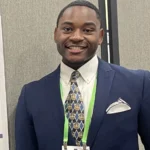
Etzer Lindor ’26, Biology and Health Policy and Management
Faculty Mentor: Dr. Brett Pellock, Biology
Bacteria capable of using extracellular metals as terminal electron acceptors during anaerobic respiration are widespread in soil and play critical roles in elemental cycling. This study investigates how bacterial consortia influence the biogeochemistry of soil manganese. Manganese reduction is monitored using PVC film sensors coated with brown paint composed of oxidized manganese species, which are solubilized and removed during reduction. Bacteria colonizing the sensors are collected using sterile swabs, isolated as single colonies on 0.2X lysogeny broth (LB) agar, and identified through 16S rRNA gene sequencing. Over 40 bacterial isolates capable of individually removing oxidized manganese paint have been recovered. As expected, several isolates are predicted to be manganese-reducing bacteria, while others are unexpectedly predicted to oxidize manganese. The ability of manganese-oxidizing bacteria to remove oxidized manganese suggests a previously underappreciated synergistic interaction between manganese-reducing and manganese-oxidizing taxa in soil. This hypothesis is being tested by comparing manganese paint removal rates of individual isolates with those observed in co-inoculated cultures of manganese-metabolizing pairs. Such interactions may arise because manganese reduction generates substrates that support manganese oxidation. This work seeks to elucidate microbial metabolic interactions underlying manganese cycling and the broader biogeochemistry of soil ecosystems.
Community-Defined Principles and Practices For Neighborly Engagement


Miranda Macaluso ’26, Biology
Chase Quigley ’26, Political Science and Public and Community Service
Faculty mentor: Dr. Carmine Perrotti, Public and Community Service
The Neighborly Engagement Research Lab (NERLab) at Providence College (PC) is a community-engaged research collaborative examining and reimagining relationships between colleges and their surrounding communities, using PC as a case study. NERLab recognizes higher education’s role in promoting civic and democratic engagement, but places emphasis on neighborhood democracy through reciprocal, place-based relationships between campuses and their host communities. Our research is guided by a simple but challenging question: What are neighborly principles and practices for higher education community engagement, as defined by local residents?
Through in-depth interviews with 20 residents and over 100 hours of participant observations at community meetings, NERLab identified six foundational principles of “neighborliness” with community members: institutional commitment and strategy, shared leadership and decision-making, recognition of community context, equitable allocation of assets, and ongoing reflection and assessment. To illuminate what neighborly engagement looks like from the perspectives of those most directly affected by it, our research also identified community-defined practices for fostering more equitable community-campus relationships.
Our poster shares the research design, theoretical and methodological perspectives, and the principles and emerging practices for neighborly engagement as defined by residents themselves